
Costa Blanca for Americans 2026: Why This Region Beats the Rest
Why 75,000+ Americans chose Spain, and the smart ones pick Costa Blanca. Towns, prices, lifestyle vs Costa del Sol. Your inside guide.
Why Smart Americans Are Choosing Costa Blanca Over Costa del Sol
When Americans think of buying property in Spain, most picture the Costa del Sol - Marbella, Mijas, the celebrity playground of the south. But here's what the savvy buyers have discovered: Costa Blanca offers the same Mediterranean lifestyle at 30-40% lower prices, with less tourist congestion and more authentic Spanish character.
According to Spain's National Statistics Institute (INE), over 50,000 Americans are officially registered as residents in Spain - with many more living unregistered. Property purchases by Americans have surged 255% since 2019, making them one of the fastest-growing buyer groups. While Costa del Sol dominated American buyer interest for decades, Costa Blanca has emerged as the insider choice - particularly for those seeking value without sacrificing quality.
At Casa Rica Estate, we've watched this shift firsthand. Our American clients increasingly arrive having done their homework: they've compared regions, analyzed prices, and concluded that Costa Blanca delivers more Mediterranean lifestyle per dollar. This guide explains why - and helps you find your perfect town.
Costa Blanca vs Costa del Sol: The Numbers Don't Lie
Before diving into Costa Blanca's towns, let's address the elephant in the room: why choose the "White Coast" over the more famous "Sun Coast"?
| Factor | Costa Blanca | Costa del Sol | Winner |
|---|---|---|---|
| Average Villa Price | €450,000-€800,000 | €650,000-€1,200,000 | Costa Blanca |
| Price per m² | €2,500-€4,000 | €3,500-€6,000 | Costa Blanca |
| Sunny Days/Year | 300+ | 320+ | Tie |
| Summer Crowds | Moderate | Intense | Costa Blanca |
| Direct US Flights | Via Madrid (8-9h total) | Via Madrid (8-9h total) | Tie |
| British Expat Saturation | Moderate | Very High | Costa Blanca |
| Rental Yield | 5-8% | 4-6% | Costa Blanca |
| Authentic Spanish Feel | Strong | Diluted | Costa Blanca |
The bottom line: Costa Blanca offers 30-40% better value while maintaining everything Americans love about Mediterranean Spain - minus the overcrowding and inflated prices of the south.
Where Exactly Is Costa Blanca?
Costa Blanca stretches 200 kilometers along Spain's southeastern Mediterranean coast, from Denia in the north to Torrevieja in the south. The region sits in the Valencia autonomous community, with Alicante-Elche Airport (ALC) as your gateway - a modern, efficient airport with connections to all major European hubs.
Getting there from the US:
- East Coast (NYC, Boston, DC): 8-9 hours via Madrid or European hubs
- West Coast (LA, SF, Seattle): 12-14 hours via Madrid or London
- Summer season: occasional direct charters from major US cities
From Alicante airport, most Costa Blanca towns are 30-60 minutes by car. Compare that to Malaga airport serving Costa del Sol - similar flight times, but Costa Blanca's airport is smaller, faster to navigate, and less chaotic.
The Six Best Costa Blanca Towns for Americans
Not all Costa Blanca towns suit American buyers equally. Some feel too British, others too German, and some are perfectly positioned for American lifestyles and expectations. Here's our honest assessment:
1. Javea (Xàbia) - The American-Friendly Choice
If one Costa Blanca town feels most "American-ready," it's Javea. This sophisticated town of 27,000 offers three distinct areas - historic old town, working port, and modern Arenal beach - giving you options that mirror American real estate preferences.
Why Americans love Javea:
- Large, established English-speaking community with American residents
- High service standards similar to US expectations
- Excellent international schools for families
- Modern infrastructure including fiber internet throughout
- Wide variety of restaurants including American-style brunch spots
Property prices (2026):
- 2-bedroom apartment: €220,000-€450,000 ($240,000-$490,000)
- 3-bedroom villa with pool: €450,000-€900,000 ($490,000-$980,000)
- Luxury villa: €900,000-€2,500,000 ($980,000-$2,700,000)
Best neighborhoods: Arenal beach area for walkability, Montgó slopes for views, Portichol for exclusive privacy.
📖 Read our complete Javea Property Guide 2026
2. Altea - The Cultural Capital
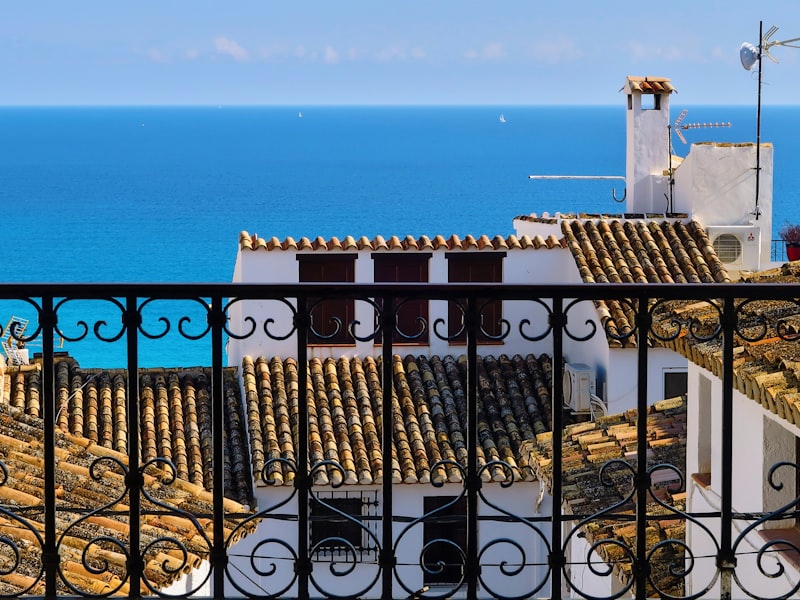
Americans who appreciate places like Carmel, Santa Fe, or Savannah will understand Altea immediately. This artistic enclave maintains strict building regulations that preserve its whitewashed old town, blue-domed church, and bohemian atmosphere.
Why Americans love Altea:
- Authentic character protected by strict development controls
- Vibrant art scene with galleries and cultural events
- Upscale restaurants and sophisticated dining
- More Spanish residents than many coastal towns (60% Spanish)
- Strong sense of community and creative energy
Property prices (2026):
- 2-bedroom apartment: €180,000-€450,000 ($195,000-$490,000)
- Old town townhouse: €280,000-€600,000 ($305,000-$655,000)
- Hillside villa: €450,000-€1,500,000 ($490,000-$1,635,000)
- Altea Hills luxury: €800,000-€3,500,000 ($870,000-$3,800,000)
Best neighborhoods: Old Town for character, Sierra Altea for views, Altea Hills for luxury amenities.
📖 Read our complete Altea Property Guide 2026
3. Moraira - The Quiet Luxury Choice
Think of Moraira as Costa Blanca's Nantucket or Carmel Valley - upscale, understated, and deliberately low-key. This former fishing village has evolved into an exclusive retreat for those who want Mediterranean luxury without flash.
Why Americans love Moraira:
- Exclusive without being ostentatious
- Pristine coves and uncrowded beaches
- High-quality restaurants (Michelin-starred options nearby)
- Peaceful atmosphere, minimal tourism infrastructure
- Strong property values with consistent appreciation
Property prices (2026):
- 2-bedroom apartment: €250,000-€500,000 ($270,000-$545,000)
- 3-bedroom villa: €500,000-€1,200,000 ($545,000-$1,300,000)
- Luxury villa: €1,000,000-€4,000,000 ($1,090,000-$4,360,000)
Best neighborhoods: El Portet for beach access, Pla del Mar for panoramas, Benimeit for seclusion.
📖 Read our complete Moraira Property Guide 2026
4. Calpe - The Value Champion
Dominated by the dramatic Peñón de Ifach rock formation (Spain's most-photographed landmark after the Alhambra), Calpe offers the best value proposition on the northern Costa Blanca. It's more developed than Moraira but more authentic than Benidorm - the Goldilocks zone for budget-conscious Americans.
Why Americans love Calpe:
- Best price-to-quality ratio on northern Costa Blanca
- Two Blue Flag beaches with modern amenities
- Diverse international community (Russian, German, British, Spanish)
- Strong rental demand from European tourists
- Good infrastructure, modern healthcare facilities
Property prices (2026):
- 2-bedroom apartment: €130,000-€350,000 ($140,000-$380,000)
- 3-bedroom villa: €350,000-€800,000 ($380,000-$870,000)
- Luxury seafront: €700,000-€2,500,000 ($765,000-$2,725,000)
Best neighborhoods: La Fossa for family beach living, Gran Sol for views, Maryvilla for community feel.
📖 Read our complete Calpe Property Guide 2026
5. Denia - The Foodie's Paradise
Denia holds UNESCO Creative City of Gastronomy status - one of only a handful worldwide. For Americans who appreciate farm-to-table dining, local ingredients, and culinary culture, Denia offers a Mediterranean food scene that rivals any American coastal city.
Why Americans love Denia:
- UNESCO gastronomy city with Michelin-starred restaurants
- Ferry connections to Ibiza and Mallorca (day trips!)
- Long sandy beaches unlike the rocky coves further south
- Active local life - this is a working Spanish town, not just a resort
- Montgó Natural Park for hiking enthusiasts
Property prices (2026):
- 2-bedroom apartment: €180,000-€400,000 ($195,000-$435,000)
- 3-bedroom villa: €400,000-€900,000 ($435,000-$980,000)
- Montgó hillside villa: €600,000-€1,800,000 ($655,000-$1,960,000)
Best neighborhoods: Las Rotas for rocky coves, Les Marines beach for sand, Montgó for mountain views.
📖 Read our complete Denia Property Guide 2026
6. Benidorm - The Urban Option
Yes, Benidorm has a reputation - but hear us out. For Americans who love Miami Beach, prefer condo living, want walkable urban amenities, and don't mind high-rises, Benidorm offers something unique on Costa Blanca: genuine city living with beach access.
Why some Americans love Benidorm:
- Urban amenities: shopping, nightlife, year-round activity
- Excellent public transport and walkability
- Wide beaches with promenades (unlike small coves elsewhere)
- Strong rental income potential (tourist demand year-round)
- Most affordable entry point on Costa Blanca
Property prices (2026):
- 2-bedroom apartment: €120,000-€300,000 ($130,000-$325,000)
- Beachfront apartment: €250,000-€600,000 ($270,000-$655,000)
- Luxury penthouse: €500,000-€1,500,000 ($545,000-$1,635,000)
Best neighborhoods: Poniente beach for quieter vibe, Levante for action, Old Town for character.
📖 Read our complete Benidorm Property Guide 2026
What $500,000 Buys You on Costa Blanca
American buyers often arrive with a $500,000 budget - a sweet spot that buys very different properties depending on where you look:
| Town | $500,000 (~€460,000) Buys You |
|---|---|
| Javea | 3-bed villa with pool, 10-15 min from beach |
| Altea | Renovated townhouse in old town OR hillside 3-bed villa |
| Moraira | 3-bed villa needing updates OR top-floor apartment with views |
| Calpe | Modern 3-bed villa with pool, sea views, good location |
| Denia | 3-bed villa with pool near beach OR hillside property with views |
| Benidorm | Luxury beachfront apartment OR multiple investment units |
For comparison, $500,000 on Costa del Sol gets you a 2-bedroom apartment in Marbella - or a modest townhouse 30 minutes inland. The value difference is stark.
The American Buying Process on Costa Blanca
Buying property in Spain as an American is straightforward but different from US real estate transactions. Key differences include:
Step 1: Get Your NIE
The NIE (Número de Identificación de Extranjero) is your Spanish tax ID - required for any financial transaction. Apply at Spanish consulates in the US (Washington, New York, Los Angeles, Chicago, Houston, Miami) or in Spain. Processing: 2-4 weeks. Learn more in our NIE Guide 2026.
Step 2: Open a Spanish Bank Account
Major Spanish banks (Sabadell, CaixaBank, BBVA) handle international clients routinely. FATCA compliance means extra paperwork for Americans, but it's manageable. Bring your NIE, passport, and proof of income.
Step 3: Property Search with a Local Expert
Work with an agency experienced with American clients. At Casa Rica Estate, we understand American expectations around due diligence, disclosure, and transaction timelines - concepts that can differ in Spain.
Step 4: Reservation Contract (10% Deposit)
Once you find your property, you'll sign a reservation contract (contrato de arras) with a 10% deposit. This removes the property from market while your lawyer conducts due diligence.
Step 5: Due Diligence (Your Lawyer's Job)
Your Spanish lawyer verifies ownership (Nota Simple), checks for debts or encumbrances, confirms building permits, and ensures everything is legal. Never skip this step.
Step 6: Notary Signing (Escritura)
Final signing occurs at a Spanish notary. You pay the balance, sign the deed, and receive keys. Budget 10-13% above purchase price for taxes, notary, and legal fees.
Full details in our Buying Property in Spain for Americans 2026 guide.
Tax Considerations for Americans on Costa Blanca
American property owners face unique tax obligations due to US citizenship-based taxation. Key points:
- You must file US taxes regardless of where you live or earn income
- FBAR/FATCA reporting required for Spanish bank accounts over $10,000
- US-Spain Tax Treaty prevents double taxation - claim foreign tax credits
- Spanish non-resident tax applies if you don't live there full-time (imputed income tax)
- Rental income taxed at 19% on net income (a July 2025 court ruling now allows non-EU residents to deduct expenses, same as EU residents)
Work with a cross-border tax specialist familiar with both US and Spanish systems. This is not DIY territory.
Living on Costa Blanca: What Americans Should Know
Healthcare: Spain's healthcare system ranks top 10 globally. Private insurance costs €100-300/month - dramatically less than US coverage. Hospitals in Denia, Benidorm, and Alicante have English-speaking staff and American-level facilities.
Language: English is widely spoken in tourist areas and expat communities. However, learning Spanish (and some Valenciano) enriches your experience enormously. Most Americans find Spanish easier than expected given shared Latin roots with English vocabulary.
Cost of Living: Expect 40-50% lower costs than major US cities. A couple can live comfortably on €2,500-3,500/month ($2,700-3,800) including housing, food, entertainment, and healthcare.
Internet: Fiber-optic internet (300 Mbps to 1 Gbps) is widely available at €30-50/month. Remote work is entirely viable - many American digital nomads have discovered this.
Driving: Your US license works for the first 6 months. After establishing residency, exchange it for a Spanish license (typically no test required for Americans).
Visa Options for Americans (Post-Golden Visa)
Spain's Golden Visa ended in April 2025, but Americans have several pathways to legal residence:
Non-Lucrative Visa: For retirees and financially independent individuals. Requires €2,400/month passive income proof. No work permitted. Most common choice for American retirees.
Digital Nomad Visa: For remote workers employed by non-Spanish companies. Requires €2,852/month income (200% of minimum wage, updated January 2026). Work permitted for foreign employers. Favorable 15% flat tax rate.
Tourist Stays: Americans can stay 90 days in any 180-day period without a visa. Perfect for "snowbirds" spending winters in Spain.
Full details in our Retire to Spain from USA 2026 guide.
Our Featured Properties for American Buyers
At Casa Rica Estate, we specialize in properties that meet American expectations for quality, transparency, and value:
Villa Calpe 2501 - €950,000 (~$1,035,000)
Modern design with stunning sea views and private infinity pool. Perfect for those seeking contemporary Mediterranean living in Calpe's best location.
Villa Altea AH130 - €2,450,000 (~$2,670,000)
Panoramic Mediterranean views from Altea's hills. Luxury finishes, expansive terraces, the ultimate Costa Blanca retreat.
Frontline Apartment Calpe - €320,000 (~$350,000)
Beachfront location, turnkey condition, excellent rental potential. Entry-level luxury on the Mediterranean.
Frequently Asked Questions
Is Costa Blanca safe for Americans?
Extremely safe. Spain ranks among Europe's safest countries, with violent crime rates far below US levels. Costa Blanca is particularly secure - most issues involve petty theft in tourist areas, easily avoided with normal precautions. You'll feel safer walking at night here than in most American cities.
How far is Costa Blanca from Madrid and Barcelona?
Madrid is 4 hours by car or 2 hours by high-speed train (AVE) from Alicante. Barcelona is 5 hours by car or 4.5 hours by train. Both make excellent weekend trips - or fly via Alicante airport's extensive connections.
Can I get a mortgage in Spain as an American?
Yes. Spanish banks offer mortgages to non-residents, typically 60-70% loan-to-value. Expect higher rates than Spanish residents (currently 4-5%) and extensive documentation requirements including US tax returns and credit reports. Many Americans prefer cash purchases for simplicity.
What's the best time of year to visit and buy?
Spring (April-May) and fall (September-October) offer ideal weather for property viewing and fewer crowds. Winter (January-March) provides serious buyer advantages - motivated sellers, negotiating power, and the chance to experience the climate you'll actually live in. Avoid August when Spain essentially shuts down for vacation.
Do I need to speak Spanish to buy property?
Not for the purchase process - we handle everything in English, and notaries provide official translators. However, learning Spanish significantly improves daily life. Most Americans find that even basic Spanish opens doors and deepens the experience.
How do I transfer money from the US to Spain?
Use specialized currency transfer services like Wise, OFX, or Atlantic Money for better exchange rates than banks. For purchases over $100,000, consider forward contracts to lock in rates. US banks can wire internationally but charge premium fees and poor exchange rates.
Is Costa Blanca crowded with tourists?
Less than Costa del Sol. Summer (July-August) brings crowds to beaches, but northern Costa Blanca towns like Moraira, Altea, and Javea remain relatively peaceful. The region offers year-round appeal, and many towns feel genuinely Spanish rather than resort-dominated.
What's the rental income potential?
Strong. Quality villas with pools command €1,500-4,000 per week in peak season. Annual gross yields of 5-8% are achievable with good management. Remember: non-EU residents pay 24% tax on gross rental income without expense deductions. Our Rental Income Guide 2026 covers details.
Next Steps: Your Costa Blanca Journey Starts Here
Costa Blanca offers Americans something increasingly rare: exceptional Mediterranean lifestyle at rational prices, with the infrastructure and English-language support to make the transition smooth.
Ready to explore your options? Contact Casa Rica Estate for personalized guidance. We specialize in helping American buyers navigate the Costa Blanca market - from initial search through purchase completion and beyond.
Last updated: February 2026. Prices and exchange rates subject to change. Consult qualified professionals for tax and legal advice specific to your situation.

Subscribe to our weekly newsletter
Stay ahead with exclusive property insights, market trends, and new listings delivered straight to your inbox every week.