

US Tax Guide: FATCA & Owning Property in Spain 2026
Complete guide to FATCA, FBAR, and IRS reporting for Americans owning property in Costa Blanca Spain. Avoid $10K+ penalties.
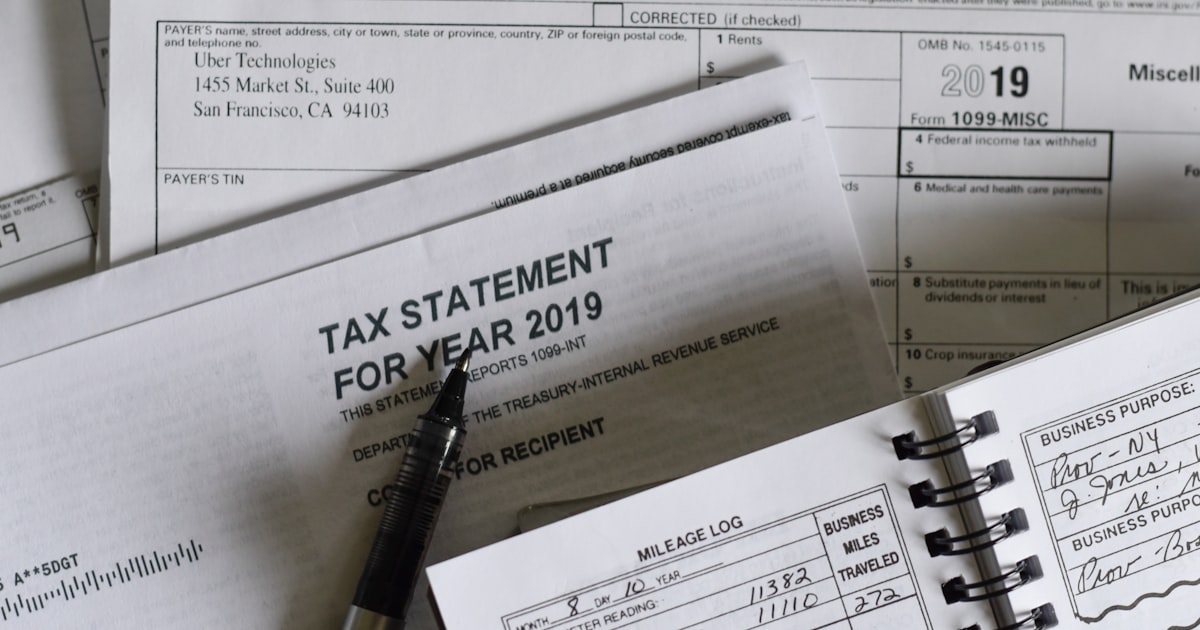
Complete guide to IRS reporting requirements, FBAR obligations, and tax implications for Americans owning real estate in Costa Blanca
Disclaimer: This article is for informational purposes only and does not constitute tax, legal, or financial advice. Tax laws are complex and subject to change. Always consult with qualified tax professionals familiar with both US and Spanish tax law before making any decisions.
Understanding Your US Tax Obligations as a Property Owner in Spain
As an American citizen or green card holder, you're taxed on worldwide income - regardless of where you live or where your assets are located. This fundamental principle means that owning property in Spain triggers specific reporting requirements with the IRS, even if you never earn a single euro from the property.
The 2026 tax landscape for US citizens with Spanish real estate involves three critical compliance areas: FATCA (Foreign Account Tax Compliance Act), FBAR (Report of Foreign Bank and Financial Accounts), and standard income tax reporting. Failure to comply with any of these can result in penalties ranging from $10,000 to 50% of account balances - or worse.
Key statistics for 2026:
- Over 80,000 Americans own property in Spain
- Costa Blanca hosts approximately 15,000 US property owners
- IRS collected $4.3 billion in FBAR penalties in 2024-2025
- Average penalty for non-willful FBAR violation: $12,500 per account per year
This comprehensive guide walks you through everything you need to know about staying compliant while enjoying your Spanish property investment.
What is FATCA and How Does It Affect Property Owners?
FATCA Basics Explained
The Foreign Account Tax Compliance Act (FATCA), enacted in 2010 and fully implemented since 2014, requires US persons to report foreign financial assets exceeding certain thresholds. While FATCA primarily targets financial accounts, it has significant implications for property owners.
FATCA reporting thresholds for 2026:
Filing Status | Living in US | Living Abroad
Single | $50,000 (year-end) / $75,000 (any time) | $200,000 (year-end) / $300,000 (any time)
Married Filing Jointly | $100,000 (year-end) / $150,000 (any time) | $400,000 (year-end) / $600,000 (any time)
Does Your Spanish Property Trigger FATCA?
Real estate itself is not a specified foreign financial asset under FATCA. However, several property-related scenarios do trigger reporting:
Reportable under FATCA:
- Spanish bank accounts used for property transactions
- Rental income deposited in Spanish accounts
- Mortgage accounts held with Spanish banks
- Investment accounts holding property-related funds
- Spanish holding companies owning real estate
Not reportable under FATCA:
- The property itself (land and buildings)
- Direct ownership of real estate
- Property improvements or maintenance costs
Form 8938: Statement of Specified Foreign Financial Assets
If your Spanish financial assets exceed FATCA thresholds, you must file Form 8938 with your annual tax return. For 2026 tax year (filed in 2027):
Required information:
- Name and address of each foreign financial institution
- Account numbers
- Maximum value during the tax year
- Type of account (deposit, custodial, other)
- Currency in which account is denominated
Penalties for non-compliance:
- $10,000 failure-to-file penalty
- Additional $10,000 for each 30 days of non-filing after IRS notice (up to $50,000)
- 40% penalty on tax underpayment attributable to undisclosed assets
FBAR Requirements: The FinCEN Form 114
Understanding FBAR Obligations
The Report of Foreign Bank and Financial Accounts (FBAR) is separate from FATCA and filed with FinCEN (Financial Crimes Enforcement Network), not the IRS. However, the consequences of non-compliance are equally severe.
FBAR filing threshold: $10,000 aggregate value across ALL foreign accounts at any time during the calendar year.
This is much lower than FATCA thresholds, meaning many property owners who don't need to file Form 8938 still need to file FBAR.
Which Accounts Must Be Reported on FBAR?
Reportable accounts:
- Spanish checking accounts
- Spanish savings accounts
- Spanish investment accounts
- Spanish retirement accounts
- Accounts where you have signature authority (even if not the owner)
- Joint accounts (report full value even if shared)
- Life insurance policies with cash value (Spain's "seguros de ahorro")
For property owners specifically:
- The account used to pay your Spanish mortgage
- The account receiving rental income
- The account paying community fees (cuotas de comunidad)
- Escrow accounts held during property purchase
- Spanish notary deposits
FBAR Filing Deadlines and Penalties
2026 Tax Year FBAR:
- Original deadline: April 15, 2027
- Automatic extension: October 15, 2027
- No extension request required
Penalties for FBAR violations:
Violation Type | Penalty
Non-willful violation | Up to $10,000 per account per year
Willful violation | Greater of $100,000 or 50% of account balance
Criminal penalties | Up to $250,000 fine and/or 5 years imprisonment
Important: The IRS can look back 6 years for FBAR violations, meaning a single unreported account could result in $60,000+ in penalties.
Spanish Taxes for Non-Resident Property Owners
Overview of Spanish Tax Obligations
As a non-resident property owner in Spain, you face several tax obligations to Spanish authorities, which then affect your US tax filing.
Spanish taxes applicable to US property owners:
Tax Type | Rate/Amount 2026 | When Due
IBI (Property Tax) | 0.4-1.1% of cadastral value | Annual, varies by municipality
Non-Resident Income Tax (imputed) | 19% of 1.1-2% cadastral value | Annual (December 31)
Non-Resident Income Tax (rental) | 19% of net rental income | Quarterly
Wealth Tax | 0.2-3.5% (€700K+ threshold) | Annual
Capital Gains Tax | 19% | Within 4 months of sale
Imputed Income Tax: The "Empty Property" Tax
Even if you never rent your Spanish property, Spain taxes you on "imputed income" - the theoretical income you could earn. For 2026:
Calculation:
- 1.1% of cadastral value (if updated in last 10 years)
- 2% of cadastral value (if not updated)
- Multiply result by 19% = your imputed income tax
Example:
- Villa in Calpe with €150,000 cadastral value (updated)
- Imputed income: €150,000 × 1.1% = €1,650
- Tax due: €1,650 × 19% = €313.50 per year
This applies whether you use the property for 1 day or 365 days.
Rental Income Taxation in Spain
If you rent your Costa Blanca property, Spanish tax treatment depends on tenant nationality:
EU/EEA tenants:
- 19% tax on NET income (expenses deductible)
- Deductible expenses: mortgage interest, IBI, insurance, maintenance, depreciation
Non-EU tenants (including Americans):
- 24% tax on GROSS income (no deductions)
- Changed since July 2025 court ruling - check current status
Quarterly filing deadlines:
- Q1 (Jan-Mar): April 1-20
- Q2 (Apr-Jun): July 1-20
- Q3 (Jul-Sep): October 1-20
- Q4 (Oct-Dec): January 1-20 (following year)
The US-Spain Tax Treaty: Avoiding Double Taxation
How the Treaty Protects You
The United States and Spain have a comprehensive tax treaty (effective since 1990, updated 2019) that prevents double taxation and provides specific rules for property income.
Key treaty provisions for property owners:
- Real property income (Article 6): Spain has primary taxing rights on rental income from Spanish property.
- Capital gains (Article 13): Spain can tax gains from selling Spanish real estate.
- Foreign Tax Credit (Article 23): US citizens can credit Spanish taxes paid against their US tax liability.
Claiming the Foreign Tax Credit
To avoid paying tax twice on the same income, file Form 1116 (Foreign Tax Credit) with your US return.
Step-by-step process:
- Calculate your Spanish rental income in USD (use IRS yearly average exchange rate)
- Report gross rental income on Schedule E
- Deduct allowable US expenses
- Complete Form 1116, Category D (passive income)
- Credit Spanish taxes paid against US tax due
2026 exchange rate note: Use the IRS published rate, not bank rates. Check irs.gov/individuals/international-taxpayers/yearly-average-currency-exchange-rates.
Excess Foreign Tax Credits
If Spanish taxes exceed your US tax on that income, you can carry forward excess credits for up to 10 years. This commonly occurs because:
- Spain taxes imputed income (US doesn't)
- Spanish rates may exceed your effective US rate
- Timing differences between tax years
Reporting Rental Income to the IRS
Schedule E Reporting Requirements
All rental income from your Spanish property must be reported on Schedule E (Form 1040), regardless of amount.
What to report:
- Gross rental receipts (converted to USD)
- Property taxes paid (IBI)
- Mortgage interest (Spanish bank)
- Insurance premiums
- Management fees
- Cleaning and maintenance
- Utilities (if you pay)
- Depreciation (residential rental: 27.5 years)
- Travel expenses for property management (limited)
Currency Conversion Rules
For income: Use the exchange rate on the date received, OR the IRS yearly average rate (simpler and usually acceptable).
For expenses: Use the exchange rate on the date paid.
For Form 1116: Use consistent methodology throughout.
Passive Activity Loss Rules
Rental activity is generally "passive" under US tax law. This means:
- Rental losses can only offset passive income
- Excess losses carry forward indefinitely
- Exception: Real estate professionals can deduct losses against ordinary income
- $25,000 special allowance for active participation (phased out $100K-$150K AGI)
Capital Gains When Selling Spanish Property
Spanish Capital Gains Tax
When you sell Spanish real estate, Spain taxes the gain at a flat 19% for non-residents.
Calculating Spanish capital gains:
- Sale price minus acquisition costs
- Minus documented improvements
- Minus allowable selling costs (notary, registry, agent fees)
- Apply 19% rate
3% retention rule: The buyer MUST retain 3% of the sale price and pay it directly to Spanish tax authorities. You then file to either:
- Apply the retention to your actual tax liability
- Claim a refund if retention exceeds tax due
US Capital Gains Reporting
You must also report the sale on your US tax return (Form 8949 and Schedule D), but you'll likely pay little or no additional US tax due to the Foreign Tax Credit.
US treatment:
- Long-term rate (owned >1 year): 0%, 15%, or 20% depending on income
- Short-term rate (owned ≤1 year): Ordinary income rates
- Net Investment Income Tax: Additional 3.8% for high earners
- Foreign Tax Credit offsets US liability
Principal Residence Exclusion
If your Spanish property qualifies as your principal residence (rare for investment property), you may exclude up to:
- $250,000 gain (single filers)
- $500,000 gain (married filing jointly)
Qualification requirements:
- Owned for 2+ years
- Used as principal residence for 2 of last 5 years
- Haven't used exclusion in last 2 years
Common Tax Mistakes to Avoid
Mistake 1: Ignoring FBAR Requirements
Many Americans don't realize their Spanish mortgage payment account triggers FBAR filing. Even a checking account with minimal balance must be reported if your aggregate foreign accounts exceed $10,000 at any point.
Solution: Track ALL foreign accounts and file FBAR annually through FinCEN's BSA E-Filing System.
Mistake 2: Forgetting Imputed Income Tax
Spain's imputed income tax catches many Americans off guard. You owe this tax even for personal-use properties.
Solution: Budget approximately €200-€500 annually for imputed income tax, depending on property value.
Mistake 3: Using Wrong Exchange Rates
Inconsistent or unofficial exchange rates can trigger IRS scrutiny and create reconciliation problems.
Solution: Use IRS published yearly average rates consistently across all forms.
Mistake 4: Missing Quarterly Spanish Filings
If you rent your property, quarterly Spanish tax filings are mandatory. Late filing triggers automatic penalties.
Solution: Hire a Spanish gestor (tax administrator) to handle filings, typically €50-€100 per quarter.
Mistake 5: Not Claiming Foreign Tax Credits
Paying Spanish taxes without claiming the US credit means paying twice unnecessarily.
Solution: Always file Form 1116 with your US return if you paid any Spanish taxes.
Mistake 6: Failing to Report Spanish Bank Accounts
The account you use for property transactions is reportable even if you don't think of it as an "investment account."
Solution: Report all accounts - checking, savings, mortgage, and escrow - on both FBAR and Form 8938 (if thresholds met).
Mistake 7: Ignoring Wealth Tax
Spain's wealth tax affects assets above €700,000 (varies by region). Valencia/Costa Blanca region has its own rates.
Solution: Calculate your Spanish net worth annually and file Modelo 714 if required.
Working with Cross-Border Tax Advisors
Why You Need Specialized Help
International tax compliance requires expertise in:
- US tax law (IRS regulations)
- Spanish tax law (Agencia Tributaria)
- Tax treaty interpretation
- Currency and timing issues
- State tax implications
Red flag: Any advisor who says "it's simple" probably doesn't understand the complexity.
Finding Qualified Professionals
In Spain (for Spanish tax compliance):
- Gestoría: Administrative services, tax filing (€100-€300/year)
- Asesor fiscal: Tax advisor, planning (€300-€1,000/year)
- Abogado fiscalista: Tax attorney, disputes (€150-€300/hour)
In the US (for US tax compliance):
- CPA with international experience
- Enrolled Agent (EA) specializing in expat taxes
- International tax attorney (for complex situations)
Recommended qualifications:
- Member of AICPA or state CPA society
- Experience with Form 1116, 8938, FBAR
- Knowledge of US-Spain tax treaty
- References from other US property owners in Spain
Cost Expectations
Service | Typical Cost
US tax return with Schedule E, Form 1116, Form 8938 | $500-$1,500
FBAR filing (standalone) | $100-$300
Spanish non-resident tax (annual) | €150-€400
Spanish rental income filing (quarterly) | €50-€100/quarter
Combined US-Spain tax planning consultation | $500-$2,000
Frequently Asked Questions
1. Do I need to report my Spanish property to the IRS?
The property itself doesn't require reporting, but associated financial accounts do. If you have Spanish bank accounts exceeding $10,000 aggregate value at any time during the year, file FBAR. If your foreign financial assets exceed FATCA thresholds, file Form 8938. Any rental income must be reported on Schedule E regardless of amount.
2. What happens if I didn't file FBAR in previous years?
You have options depending on whether the failure was "willful" or "non-willful." The Streamlined Filing Compliance Procedures allow qualifying taxpayers to become compliant with reduced penalties. For non-willful violations, you may pay a 5% penalty on foreign assets. Consult a tax professional immediately - the voluntary disclosure process is complex.
3. Can I deduct my Spanish mortgage interest on my US taxes?
Yes, mortgage interest on your Spanish rental property is deductible on Schedule E as a rental expense. However, if the property is a personal residence (not rented), the interest may be deductible on Schedule A as qualified residence interest, subject to the $750,000 mortgage limit for homes acquired after December 15, 2017.
4. How do I handle depreciation for Spanish property?
For US tax purposes, depreciate your Spanish rental property over 27.5 years using the straight-line method. Calculate the depreciable basis by subtracting land value from your total cost basis (purchase price plus acquisition costs). Spain doesn't allow non-residents to depreciate property, creating a permanent difference.
5. What if Spain and the US both want to tax my rental income?
This is exactly what the US-Spain Tax Treaty prevents. Spain has primary taxing rights on Spanish property income. You pay Spanish taxes first, then claim a Foreign Tax Credit on Form 1116 to offset your US tax liability. In most cases, the credit eliminates double taxation entirely.
6. Do I need to file Spanish taxes if I don't rent the property?
Yes. Spain requires non-residents to file annual imputed income tax (Modelo 210) even for personal-use properties. You're taxed on the theoretical income you could earn from the property. Additionally, you must pay IBI (property tax) annually to your local ayuntamiento.
7. How does the 3% retention work when I sell?
Spanish law requires buyers to withhold 3% of the purchase price and pay it directly to Hacienda (Spanish tax authority) within one month of completion. As the seller, you then file a capital gains return (Modelo 210) within 4 months. If your actual tax is less than 3%, you claim a refund. If it's more, you pay the difference.
8. What's the penalty for late FBAR filing?
Non-willful FBAR violations carry penalties up to $10,000 per account per year. Willful violations can result in the greater of $100,000 or 50% of account balance per violation, plus potential criminal prosecution. The IRS has increasingly pursued FBAR penalties, collecting over $4 billion in 2024-2025.
9. Can I hold Spanish property through an LLC to simplify taxes?
Holding Spanish property through a US LLC creates significant complications. Spain may treat the LLC as a separate taxable entity (sociedad), triggering corporate tax at 25%. The US may treat it as a disregarded entity or partnership. Additionally, you may trigger CFC (Controlled Foreign Corporation) or PFIC (Passive Foreign Investment Company) reporting. Generally, direct ownership is simpler for individual investors.
10. How do I prove Spanish taxes paid for the Foreign Tax Credit?
Keep all Spanish tax receipts (modelo 210 filings, IBI receipts), bank statements showing payments, and NIE-linked tax records. The IRS may request documentation during audit. Spanish tax documents are in Spanish - have key items translated if substantial amounts are involved.
11. What if I live in Spain part of the year?
If you spend more than 183 days in Spain, you become a Spanish tax resident and your worldwide income becomes taxable in Spain. This completely changes your tax situation and triggers different US reporting requirements (Form 2555 for foreign earned income exclusion, potential expatriation rules). Monitor your days carefully.
12. Are community fees (cuotas de comunidad) tax-deductible?
Yes, for rental properties. Community fees are deductible as operating expenses on Schedule E. For personal-use properties, they are not deductible on your US return but may be deductible against imputed income in Spain (check with your Spanish advisor).
Action Checklist for US Property Owners in Spain
Annual US requirements:
- [ ] File Form 1040 with Schedule E (if rental income)
- [ ] File Form 1116 (Foreign Tax Credit)
- [ ] File Form 8938 (if FATCA thresholds met)
- [ ] File FBAR via FinCEN BSA E-Filing (if $10K+ in foreign accounts)
Annual Spanish requirements:
- [ ] Pay IBI (property tax) to ayuntamiento
- [ ] File Modelo 210 (imputed income or rental income summary)
- [ ] File Modelo 714 (wealth tax, if applicable)
Quarterly Spanish requirements (if renting):
- [ ] File Modelo 210 for each quarter with rental income
Record keeping:
- [ ] Maintain all Spanish bank statements
- [ ] Keep rental contracts and payment records
- [ ] Preserve purchase documents (escritura, gastos)
- [ ] Track improvements with invoices
- [ ] Document days present in Spain
Conclusion
Owning property in Costa Blanca as an American citizen involves navigating two tax systems simultaneously. While the compliance burden is real - FATCA, FBAR, Spanish imputed income tax, and quarterly rental filings - the rewards of Spanish property ownership can far outweigh the administrative complexity.
The key is proactive compliance: understand your obligations, maintain meticulous records, work with qualified professionals on both sides of the Atlantic, and file everything on time. The penalties for non-compliance are severe, but the system is designed to work for those who engage with it honestly.
Casa Rica Estate works with a network of bilingual tax professionals familiar with US-Spain cross-border issues. Contact us for referrals to advisors who can help ensure your Spanish property investment remains compliant and tax-efficient.
Last updated: February 2026
This article is for informational purposes only and does not constitute tax, legal, or financial advice. Tax laws change frequently. Consult qualified professionals before making tax-related decisions.

Subscribe to our weekly newsletter
Stay ahead with exclusive property insights, market trends, and new listings delivered straight to your inbox every week.